Tag: nearshoring

  • What a Softlanding Actually Means: The Hidden Half of Nearshoring

    What a Softlanding Actually Means: The Hidden Half of Nearshoring

    Every nearshoring success story sounds the same in the boardroom: lower freight costs, USMCA tariff advantages, a time zone that overlaps with your supply chain. What rarely makes the slide deck is the eighteen-month gap between “we’ve decided on Mexico” and “the line is running.” That gap has a name. It’s called a softlanding, and it is the unglamorous, unphotographed half of nearshoring that determines whether your plant ships on schedule or burns a year chasing permits you didn’t know you needed.

    (Quick dad-joke before the serious part: why did the plant manager bring a ladder to the permitting office? Because he heard the approval process had a lot of levels. We’ll see ourselves out.)
    Industrial facility floor in Mexico

    What “softlanding” actually covers

    A softlanding is not a single service — it’s the connective tissue between three workstreams that, left to run independently, will collide. Real estate moves on a lease negotiation clock. Compliance — your IMMEX program, environmental permits, municipal licenses — moves on a bureaucratic clock that doesn’t care about your lease. Workforce moves on a recruiting and training clock that can’t really start until you know which building you’re hiring for. A softlanding partner’s only job is to make those three clocks tick in parallel instead of in sequence.

    Done well, it compresses what would be a 24-to-30-month solo effort into something closer to 12-to-16 months. Done badly — or not done at all — it’s the reason so many “nearshoring wins” quietly slip a year behind their original investment case.

    The three things that actually delay a plant

    • Power, not floor space. Most foreign manufacturers shortlist sites on square meters and lease rate. The real constraint is almost always electrical capacity — getting CFE to commit a multi-megawatt feed to your building can take longer than building the building.
    • Permits that depend on other permits. Your municipal operating license often can’t be finalized until your environmental impact statement clears, which can’t be filed until your civil engineering plans are stamped, which can’t happen until the lease is signed. Sequencing this correctly is the entire skill — and yes, it’s exactly as fun as it sounds.
    • A workforce plan that starts too late. In competitive labor markets like Querétaro or Tijuana, the operators and supervisors you need are already employed by someone else. Recruiting has to start before the building is finished, not after.

    The decision to nearshore is the easy part. The landing is the part that shows up in your P&L eighteen months later — either as a plant that’s running, or as a lease you’re paying on a building that still isn’t permitted.

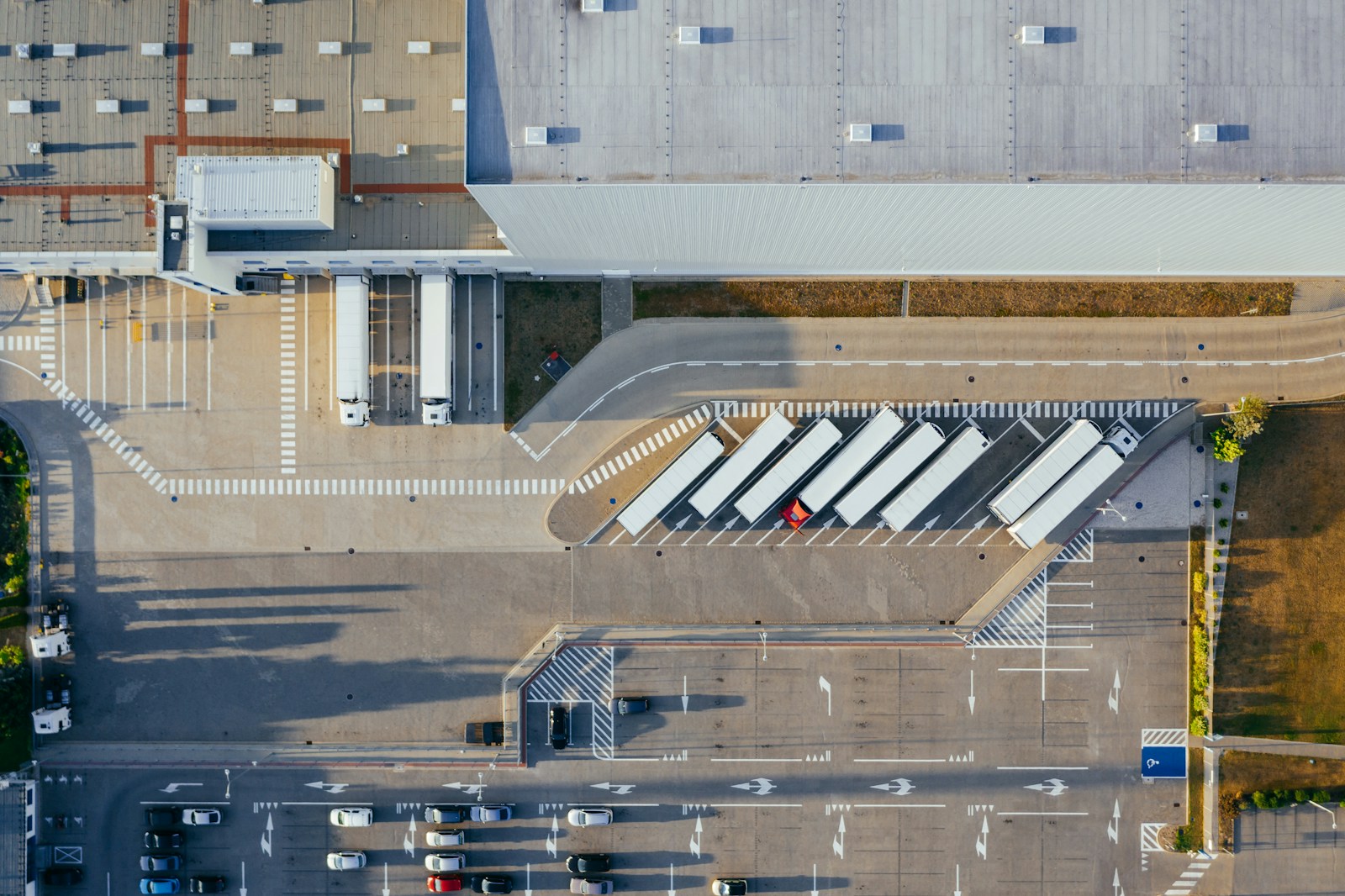
    Aerial view of an industrial park in central Mexico

    Shelter, standalone, or somewhere in between

    The first real decision a softlanding forces is structural: do you operate under a shelter company’s legal and customs umbrella, or stand up your own IMMEX entity from day one? Shelter gets you producing in months, not quarters, because someone else already holds the permits — you’re renting their compliance infrastructure along with the building. Standalone IMMEX takes longer to stand up but gives you full ownership of the entity, direct access to state incentive negotiations, and no ceiling on how the operation scales. Most plants we land start under shelter and convert to standalone once volume justifies the overhead — which is itself a decision a good softlanding plan should be timed around, not bolted on as an afterthought.

    What good looks like

    A softlanding done right is almost invisible from the outside. There’s no dramatic turnaround story — just a building that had power on the day it was supposed to, a customs program that was approved before the first container needed to clear, and a floor full of trained operators on first-article day. The measure of success isn’t speed for its own sake; it’s the absence of the eighteen-month surprise. That’s the entire job, and it’s why we treat site selection, permitting, and workforce as one coordinated effort instead of three separate vendors hoping their timelines line up.

    Curious what that looks like for your specific plant? Tell us what you build — we’ll tell you, with refreshingly few surprises, where it lands.
  • Why the Bajío Corridor Is Becoming Mexico’s Manufacturing Heartland

    Why the Bajío Corridor Is Becoming Mexico’s Manufacturing Heartland

    If you’d asked a site selection consultant in 2015 where to put a new plant in Mexico, the answer was almost reflexively Monterrey or Tijuana — established corridors with deep automotive and electronics supply bases. Ask the same question today and the answer is increasingly the Bajío: Querétaro, Guanajuato, San Luis Potosí, and Aguascalientes, a band of central-Mexican states that has quietly become the country’s fastest-growing manufacturing region.

    (Bajío, for the uninitiated, translates roughly to “lowlands.” A fairly modest name for a region currently out-hustling corridors with way cooler nicknames. The supply chain doesn’t care about branding.)

    Industrial park rooftops across the Bajío region of Mexico

    Why the Bajío, specifically

    Three structural advantages compound here in a way they don’t elsewhere in the country.

    1. Geography that splits the difference. The Bajío sits roughly equidistant from the Pacific port of Manzanillo, the Gulf port of Veracruz, and the major northern border crossings. For manufacturers who need both import flexibility and northbound logistics under USMCA, that central position cuts inland freight in a way Tijuana or Monterrey — each tied more tightly to a single corridor — cannot.
    2. An automotive and aerospace base that breeds suppliers. Querétaro’s aerospace cluster and Guanajuato’s automotive corridor (anchored by plants from GM, Mazda, and Honda) have pulled in a dense tier-2 and tier-3 supplier base over two decades. A new entrant isn’t building a supply chain from nothing — they’re plugging into one that already exists.
    3. Labor depth without the wage inflation of the border. Maquiladora corridors at the northern border have run hot on wages for years as competing employers bid for the same labor pool. The Bajío’s labor market is large, increasingly technical, and — for now — less saturated.

    The Bajío isn’t winning because it’s cheaper. It’s winning because it’s better positioned, and the supplier base has finally caught up to the geography.

    What it means for site selection

    The practical effect for anyone running site selection today is that the Bajío’s best Class-A parks — El Marqués in Querétaro, the Apaseo and Silao corridors in Guanajuato — are filling up faster than new shovel-ready inventory is coming online. Power availability, not land, is becoming the binding constraint: getting CFE to commit a multi-megawatt feed in the more built-up municipalities can now take longer than the building itself. That’s pushing some new entrants slightly further out, toward parks with pre-cleared utility capacity even if they cost a little more in commute time for the workforce.

    Logistics trucks staged outside a Bajío distribution center

    The other corridors still have a case

    None of this makes Monterrey or Tijuana the wrong answer — it depends on what you’re shipping and to whom. Northeast Mexico still wins for anything moving primarily to the U.S. Midwest and Southeast, where the Nuevo Laredo and Colombia bridge crossings shorten the last mile dramatically. The Northwest still wins for cross-border, just-in-sequence operations feeding Southern California, where same-day Otay or Mesa de Otay crossings matter more than any other variable. The Bajío’s advantage is breadth — it’s the right default when your customer base is distributed rather than concentrated on one coast.

    Our read for the next few years

    Expect the Bajío’s growth to keep outpacing the border corridors, but expect the constraint to shift from land to infrastructure: power, water, and skilled-trades training capacity. The plants that land well here over the next cycle won’t be the ones that found the cheapest site — they’ll be the ones that locked in utility commitments and a workforce pipeline before the corridor’s labor market tightens the way the northern border’s already has. That’s the same coordination problem we cover in what a softlanding actually means — the Bajío just raises the stakes on getting it right.

    Thinking about the Bajío for your next plant? Book a softlanding call and we’ll walk you through what’s actually shovel-ready right now.